
Florida Sports Injuries: Warning Signs You Need a Doctor
Recognizing sports injury warning signs can mean the difference between a quick recovery and months of chronic pain. Whether you’re a weekend warrior, competitive athlete, or parent watching your child play, knowing when to seek professional medical evaluation protects long-term mobility and performance.
Many Florida athletes push through discomfort. However, serious injuries often disguise themselves as temporary setbacks. In fact, Dr. Amit Varma and the medical team at Florida Sports Injury & Orthopedic Institute see patients every week who waited too long. Consequently, treatable conditions turn into surgical cases.
Key Takeaways: When Sports Injuries Require Medical Attention
- Immediate swelling, severe pain, or inability to bear weight signals potential fracture or ligament tear
- Numbness, tingling, or loss of sensation indicates possible nerve damage requiring urgent evaluation
- Joint instability, grinding sensations, or locking episodes suggest structural damage beyond minor sprains
- Symptoms persisting beyond 72 hours despite RICE protocol warrant professional assessment
- Florida’s heat and humidity compound injury recovery, making early intervention critical
Understanding Sports Injury Warning Signs
The body sends clear distress signals when injury exceeds its self-repair capacity. Pain serves as the primary alarm system. However, intensity alone doesn’t determine severity. For example, a partially torn ACL might cause less initial pain than a muscle cramp. Nevertheless, it requires surgical reconstruction while the cramp resolves in minutes.
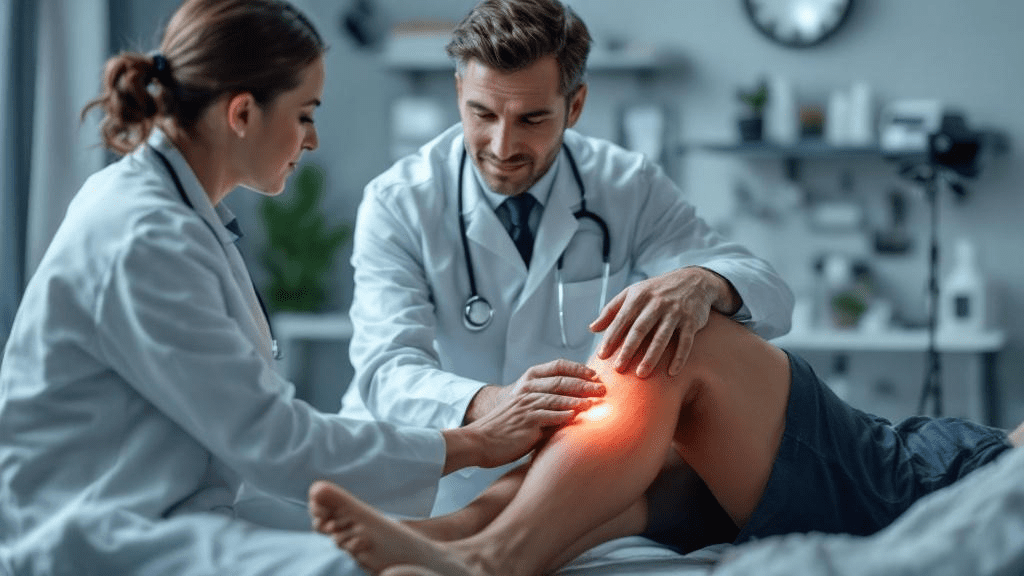
Location, duration, and functional limitation provide more reliable diagnostic clues than pain level. When normal movement becomes impossible, structural damage likely exists. For instance, you can’t fully extend your elbow, bear weight on your ankle, or rotate your shoulder. In these cases, the orthopedic specialists at Varma Shoulder Institute use evidence-based protocols. Therefore, they can differentiate between injuries that heal with conservative treatment and those requiring advanced intervention.
Critical Symptoms That Demand Immediate Care
Certain warning signs eliminate any question about seeking medical evaluation:
Deformity or Misalignment
Visible bone displacement, unnatural joint angles, or asymmetry compared to the uninjured side indicates fracture or dislocation. These emergencies require immediate stabilization to prevent neurovascular compromise.
Inability to Bear Weight
Refusing to put pressure on an injured limb within the first few hours suggests significant structural damage. Fractures, complete ligament tears, and severe high ankle sprains prevent weight-bearing until properly treated.
Rapid, Severe Swelling
Moderate swelling over 24-48 hours is normal inflammatory response. Dramatic swelling within minutes signals substantial tissue damage, possible fracture, or hemarthrosis (bleeding into the joint).
Numbness or Tingling
Nerve symptoms indicate compression or direct nerve injury. Shoulder separations, elbow dislocations, and certain fractures endanger nearby nerves. Prompt evaluation prevents permanent sensory or motor loss.
Popping, Grinding, or Catching Sensations
Audible pops during injury often accompany ligament tears. Persistent grinding, clicking, or joint locking indicates loose bodies, cartilage damage, or mechanical dysfunction requiring imaging studies.
Loss of Range of Motion
Complete inability to move a joint through its normal arc suggests complete tendon rupture, fracture, or severe ligament injury. Partial limitation may indicate muscle tears or joint effusion.
Common Sports Injuries and Their Red Flags
Knee Injuries
Florida’s popular sports place enormous stress on knee structures. Specifically, basketball, soccer, football, and tennis create high-risk conditions. Additionally, ACL tears, meniscus damage, and patellar dislocations share overlapping symptoms. However, they require different treatment approaches.
According to the American Academy of Orthopaedic Surgeons, over 200,000 ACL injuries occur annually in the United States. Moreover, athletes ages 15-45 face highest risk. Warning signs include immediate swelling and inability to continue playing. Additionally, the knee may feel like it’s “giving way.” Furthermore, patients often have difficulty fully straightening the leg.
Shoulder Injuries
Throwing athletes and swimmers commonly develop rotator cuff issues. Similarly, they experience labral tears and shoulder instability. Notably, Dr. Amit Varma specializes in complex shoulder reconstruction. In fact, his double-board-certification in orthopedic surgery and sports medicine makes him uniquely qualified for Florida athletes.
Warning signs include pain with overhead activities and weakness when lifting. Additionally, clicking or popping occurs with movement. Moreover, nighttime pain often disrupts sleep. Sudden loss of motion following a fall or tackle may indicate acute rotator cuff tear. Alternatively, it could signal shoulder dislocation.
Ankle Sprains
Not all ankle “twists” qualify as minor sprains. Therefore, the Ottawa Ankle Rules help determine when X-rays are necessary. Specifically, Florida Sports Injury & Orthopedic Institute uses these validated guidelines:
- Inability to walk four steps immediately after injury
- Bone tenderness along specific landmarks
- Significant swelling within the first hour
- Bruising appearing rapidly
High ankle sprains affect the syndesmotic ligaments. These connect the tibia and fibula. Consequently, they require longer recovery than common lateral ankle sprains. Furthermore, they often need advanced imaging to diagnose properly.
When “Walking It Off” Makes Things Worse
American sports culture celebrates toughness. As a result, athletes often minimize injury and continue playing. However, this mindset causes preventable complications. For instance, continuing activity on a stress fracture converts it to a complete fracture. Similarly, playing through ACL instability damages meniscus cartilage. Moreover, swimming with a partial rotator cuff tear completes the rupture.
The National Institute of Arthritis and Musculoskeletal and Skin Diseases emphasizes early intervention. In fact, it’s the key factor determining recovery outcomes. Consequently, acute injuries treated within the first week respond better to conservative therapies. On the other hand, chronic injuries develop scar tissue, muscle atrophy, and compensatory movement patterns. Therefore, they require extensive rehabilitation.
RICE Protocol: When It’s Not Enough
Rest, Ice, Compression, and Elevation form the foundation of acute injury management. Initially, this protocol reduces inflammation and prevents secondary damage. However, RICE alone cannot heal structural injuries.
If symptoms don’t improve significantly within 48-72 hours, professional evaluation is necessary. Specifically, persistent pain, continued swelling, or functional limitation after three days indicates serious injury. Therefore, proper home care alone may not be sufficient.
Why Florida Athletes Need Specialized Orthopedic Care
Climate Challenges
Florida’s climate creates unique challenges for injury recovery. Specifically, high heat and humidity increase metabolic demands during healing. Additionally, they stress cardiovascular systems during rehabilitation. Furthermore, warm weather encourages athletes to resume activity before full recovery. Therefore, the sports medicine physicians at Florida Sports Injury & Orthopedic Institute understand these environmental factors. As a result, they adjust treatment protocols accordingly.
Year-Round Competition
Year-round sports participation prevents traditional “off-seasons.” Consequently, overuse injuries don’t get adequate time to heal. Moreover, young athletes compete in multiple leagues simultaneously. Thus, they accumulate repetitive stress without proper recovery. Dr. Aalok Shah and Dr. Brian Patterson specialize in non-operative sports medicine. Therefore, they develop return-to-play protocols that balance competitive demands with tissue healing requirements.
How FSI Evaluates Sports Injuries
Initial evaluation at Florida Sports Injury & Orthopedic Institute follows evidence-based diagnostic protocols. Specifically, we combine physical examination, patient history, and advanced imaging when indicated.
Clinical Assessment
First, board-certified specialists perform systematic examinations. These tests measure strength, range of motion, joint stability, and neurovascular status. Additionally, specific provocative tests provide diagnostic accuracy. For example, the Lachman test checks ACL integrity. Similarly, the Hawkins-Kennedy test identifies shoulder impingement. Overall, these tests provide accuracy exceeding 85% for common sports injuries.
Diagnostic Imaging
Next, X-rays identify fractures and joint alignment. Furthermore, MRI reveals soft tissue injuries. These include ligament tears, tendon ruptures, and cartilage damage—all invisible on conventional radiographs. Additionally, ultrasound enables dynamic assessment of tendon function. Moreover, it guides precise injection therapies.
Treatment Planning
Finally, Dr. Matthew Lee Welsh (hand and extremity specialist), Dr. Peter Shekailo (hip and knee reconstruction), and Dr. William Athans (sports medicine) collaborate. Together, they develop individualized treatment plans. Options range from physical therapy and PRP injections to arthroscopic surgery. In some cases, joint replacement becomes necessary when conservative measures fail.
Florida Sports Injuries: Minor vs. Serious Symptoms
| Symptom Category | Minor Injury Indicators | Serious Injury Warning Signs |
|---|---|---|
| Pain Level | Mild to moderate discomfort; improves with rest | Severe pain; worsens with any movement |
| Swelling | Gradual onset over 24+ hours; localized | Rapid swelling within minutes; joint distension |
| Function | Can complete limited activity with discomfort | Cannot bear weight or move joint |
| Stability | Joint feels stable; normal alignment | Joint feels loose, unstable, or misaligned |
| Sensation | Normal feeling throughout extremity | Numbness, tingling, or complete loss of sensation |
| Sound | No audible sounds during injury | Loud pop, snap, or crack at time of injury |
| Recovery | Improves significantly within 48-72 hours | No improvement or worsening after 3 days |
| Recommended Action | RICE protocol; monitor symptoms | Immediate medical evaluation required |
Prevention Strategies for Florida Athletes
The most effective treatment is injury prevention. Therefore, the team at Varma Shoulder Institute and Florida Sports Injury & Orthopedic Institute emphasizes:
Proper Conditioning
Sport-specific strength training and flexibility programs reduce injury risk significantly. In fact, research published in the British Journal of Sports Medicine shows 30-50% risk reduction. Additionally, off-season conditioning prepares tissue for competitive demands.
Technique Refinement
Biomechanical flaws accumulate stress on vulnerable structures. For example, poor throwing mechanics and improper landing techniques cause problems. Therefore, professional coaching and sports medicine evaluation help. Specifically, they identify and correct movement patterns before injury occurs.
Equipment Optimization
Properly fitted protective gear is essential. Similarly, appropriate footwear matters. Furthermore, sport-specific equipment minimizes impact forces. As a result, it supports proper alignment.
Adequate Recovery
Rest between training sessions allows tissue repair and adaptation. Specifically, young athletes need 1-2 days off per week. Therefore, this break from organized sports participation is crucial.
Hydration and Nutrition
Florida’s climate demands aggressive hydration strategies. Additionally, proper nutrition supports tissue healing. Moreover, it maintains energy systems during competition.
Take Control of Your Recovery

Expert Care When You Need It Most
Sports injuries don’t heal on hope alone. Therefore, seeking professional care makes all the difference. Additionally, early treatment prevents minor problems from becoming major complications.
The orthopedic specialists at Florida Sports Injury & Orthopedic Institute combine decades of training with cutting-edge treatment options. As a result, athletes of all levels return to peak performance faster and safer.
Convenient Clermont Location
Located at 1925 Don Wickham Drive in Clermont, FL, FSI provides comprehensive evaluation and treatment. Furthermore, we offer same-day appointments for urgent concerns. Meanwhile, our walk-in clinic accepts patients without scheduling delays.
Board-Certified Specialists
Dr. Amit Varma’s fellowship training positions him among Florida’s most qualified orthopedic specialists. Moreover, his team includes non-operative sports medicine physicians Dr. Aalok Shah and Dr. Brian Patterson. Consequently, you receive the full spectrum of treatment options—from conservative therapies to advanced surgical reconstruction.
Stop guessing whether your sports injury needs professional attention.
FAQ: Sports Injury Warning Signs
How long should I wait before seeing a doctor for a sports injury?
Seek immediate evaluation for severe pain, visible deformity, inability to bear weight, or numbness. For less dramatic injuries, apply RICE protocol for 48-72 hours. If symptoms don’t improve significantly within this timeframe, schedule an orthopedic evaluation. Delays beyond one week often complicate diagnosis and extend recovery.
Can I still play sports with a minor injury?
“Minor” injuries that don’t limit performance or cause pain during activity generally allow continued participation. However, any injury producing pain during play, reducing performance, or requiring pain medication to compete needs professional assessment. Playing through injury risks converting minor damage into major structural failure.
What’s the difference between a strain and a sprain?
Strains affect muscles or tendons (the cords connecting muscle to bone). Sprains damage ligaments (the bands connecting bone to bone). Both cause pain, swelling, and functional limitation. Accurate diagnosis requires clinical examination since symptoms overlap significantly. Treatment approaches differ based on injured structure severity.
Do all sports injuries need imaging studies?
No. Clinical examination accurately diagnoses many injuries without X-rays or MRI. However, suspected fractures, complete ligament tears, significant joint instability, or symptoms persisting despite appropriate conservative treatment warrant imaging. Your orthopedic specialist determines which studies, if any, are medically necessary.
When does a sports injury require surgery?
Most sports injuries respond to non-operative treatment including physical therapy, medication, and activity modification. Surgery becomes necessary for complete ligament ruptures, displaced fractures, mechanical joint dysfunction, or failed conservative management after 8-12 weeks. The orthopedic surgeons at FSI exhaust appropriate conservative options before recommending surgical intervention.
How soon can I return to sports after an injury?
Return-to-play timing depends on injury severity, healing progression, sport demands, and competitive level. Minor injuries may resolve in days while severe ligament tears require 6-12 months of rehabilitation. Premature return dramatically increases re-injury risk. Your sports medicine physician develops individualized timelines based on objective strength, stability, and functional testing.













Leave a reply